Sauna
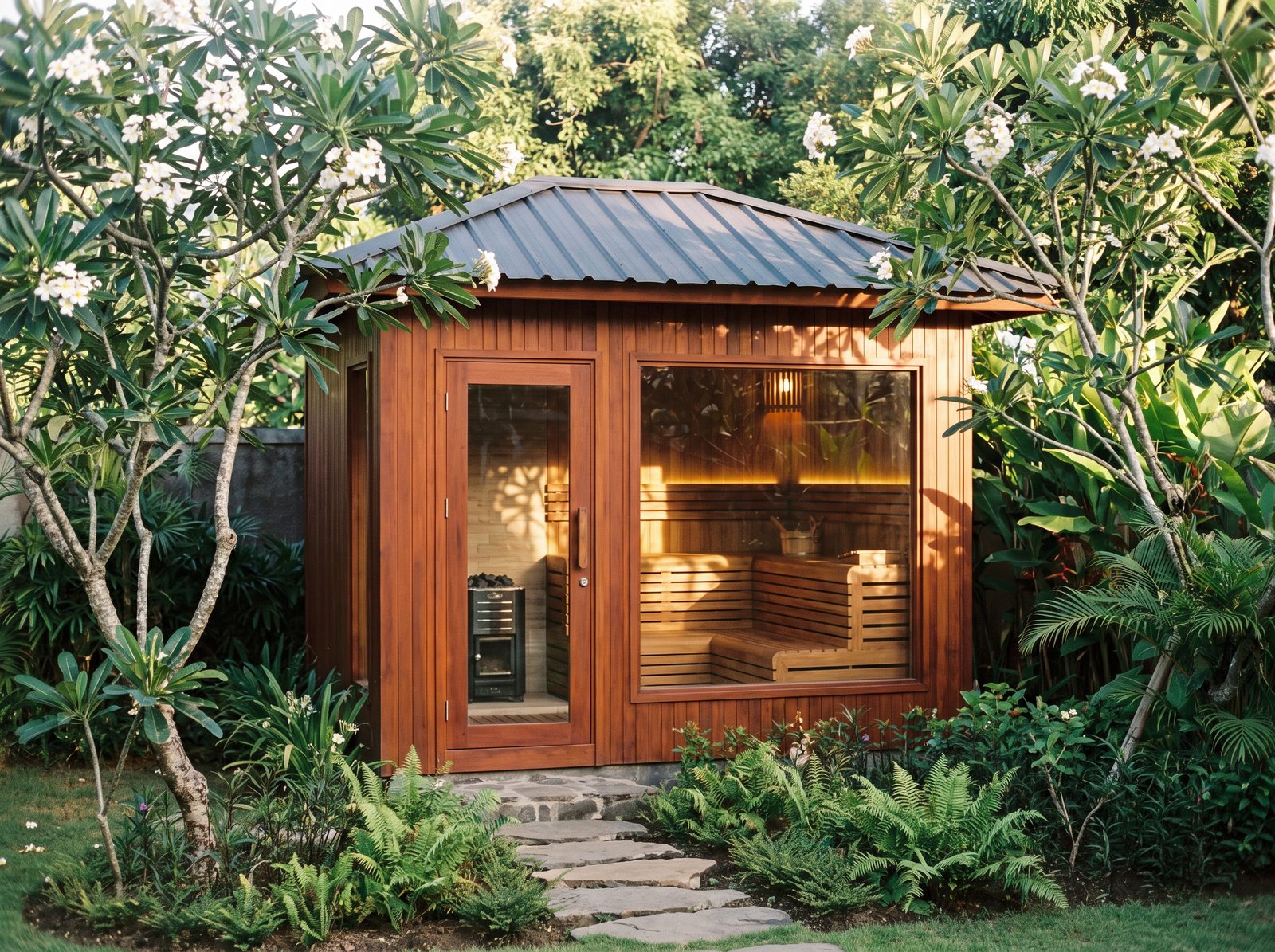
Outdoor cabin sauna
The proper one. Standing headroom, a two-tier bench, and as much glass as the heat-load calculation…
from IDR 125,000,000
Sauna · from IDR 52,000,000 (≈ USD 3,200)
A different machine, not a lesser sauna. Lower temperature, longer sessions, and a power draw your existing supply can almost certainly carry.
3 years and 100+ builds across Lombok and the Gilis. Message us for photos of similar projects, or tap «Get a project quote» and a project manager will get back to you shortly.
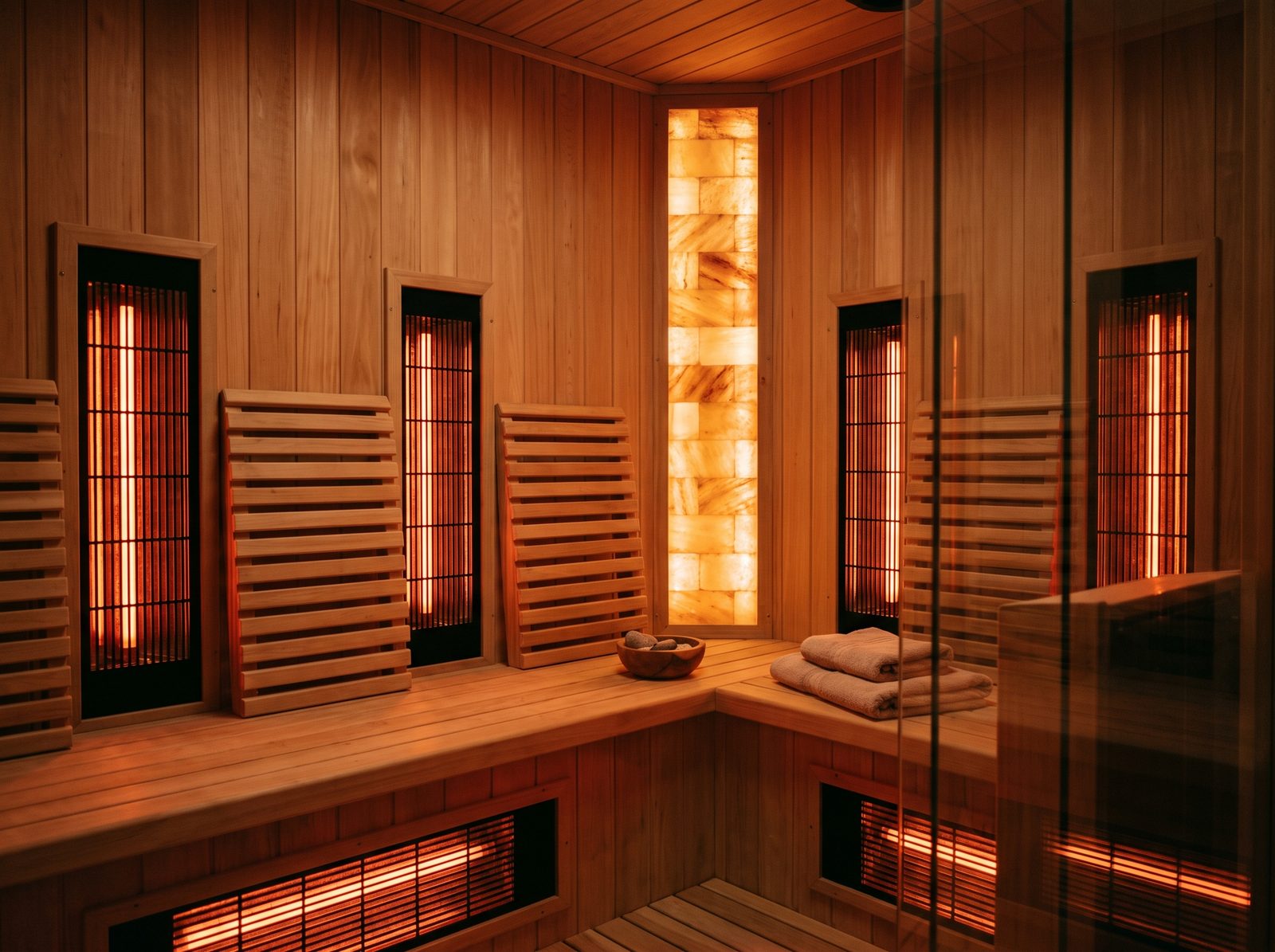
An infrared cabin is not a small traditional sauna. It is a radiant heater in a box: panels warm your body directly rather than heating the air, so the room sits at 45–60 °C instead of ninety, and you stay in it for half an hour instead of ten minutes. There is no stone heater, no water, no steam, and no löyly.
People who want a traditional sauna and buy infrared are disappointed. People who want infrared and get it are usually delighted. The whole job of this page is to make sure you know which one you are.
Two things, mainly. The first is power. A carbon-panel cabin draws somewhere around 1.8–2.6 kW total — about the same as a kettle and a hairdryer. That is the entire reason it exists on this island. A large share of Lombok villas run on a single-phase PLN supply that will not carry a 6 kW stone heater without an upgrade, and an infrared cabin sidesteps that conversation completely. No upgrade, no three-phase, no waiting.
The second is the session. At 55 °C you can sit and read for forty minutes. Some people simply prefer that to eight intense minutes at ninety, and they are not wrong — it is a different experience, not a diluted one.
An infrared cabin is the only model on this site that comfortably goes indoors, in a spare room or a large bathroom, with no flue, no drainage and no special ventilation. That makes it the default answer for apartments, small villas and anything rented.
There is no löyly. You cannot throw water on anything. The dry radiant heat does not produce the rolling wave of steam that is, for a lot of people, the entire point of a sauna — and if that sentence made you wince, buy an outdoor cabin instead.
It also will not hold a group. Two adults is the honest number for most cabins; three if they know each other well. And it does not have the thermal mass of a stone heater, so it does not have that quality of a room that stays hot after you turn it off.
The full comparison, with a table, is in infrared versus traditional sauna.
Infrared pairs perfectly well with a plunge. The contrast cycle works from 55 °C as it does from ninety — you are simply spending longer on the hot side to get there. If anything the gentler ramp suits people who find the traditional room overwhelming.
Pair it with a cedar ice bath and you have a complete hot-and-cold setup on a standard domestic supply, which is a genuinely useful thing on a site where the grid is the constraint.
Questions
It is different, not lesser. Infrared runs at 45–60 °C and warms you by radiation, so sessions are longer and gentler. A traditional sauna runs at 80–100 °C with steam and löyly, which infrared cannot produce at all. If you want the rolling wave of steam, buy traditional. If you want low power, indoor installation and a long relaxed session, buy infrared.
Typically 1.8 to 2.6 kW in total for a two- to three-person carbon-panel cabin — roughly a kettle plus a hairdryer. That is the main reason infrared is popular in Lombok: it runs on a standard single-phase villa supply with no PLN upgrade, where a 6 kW stone heater would usually force one.
Yes, and it is the only model we supply that comfortably does. It needs no flue, no drainage and no dedicated ventilation, so a spare room, a large bathroom or a covered terrace all work. It needs a level floor, a dedicated socket circuit, and about 1.2 × 1.2 m of space for a two-person cabin.
No, never. There are no stones and no thermal mass — the panels are electrical emitters and water on them is a fault, not a feature. If throwing water and making steam matters to you, you want a traditional room with a stone heater, and we would rather sell you the right thing than the cheaper thing.
Also consider
Prices are indicative starting points for the unit itself and are quoted in good faith, not as a fixed offer. Foundations, drainage, glass, electrical supply upgrades and island freight are itemised separately. Every firm price follows a site survey.
Sauna
The proper one. Standing headroom, a two-tier bench, and as much glass as the heat-load calculation…
Sauna
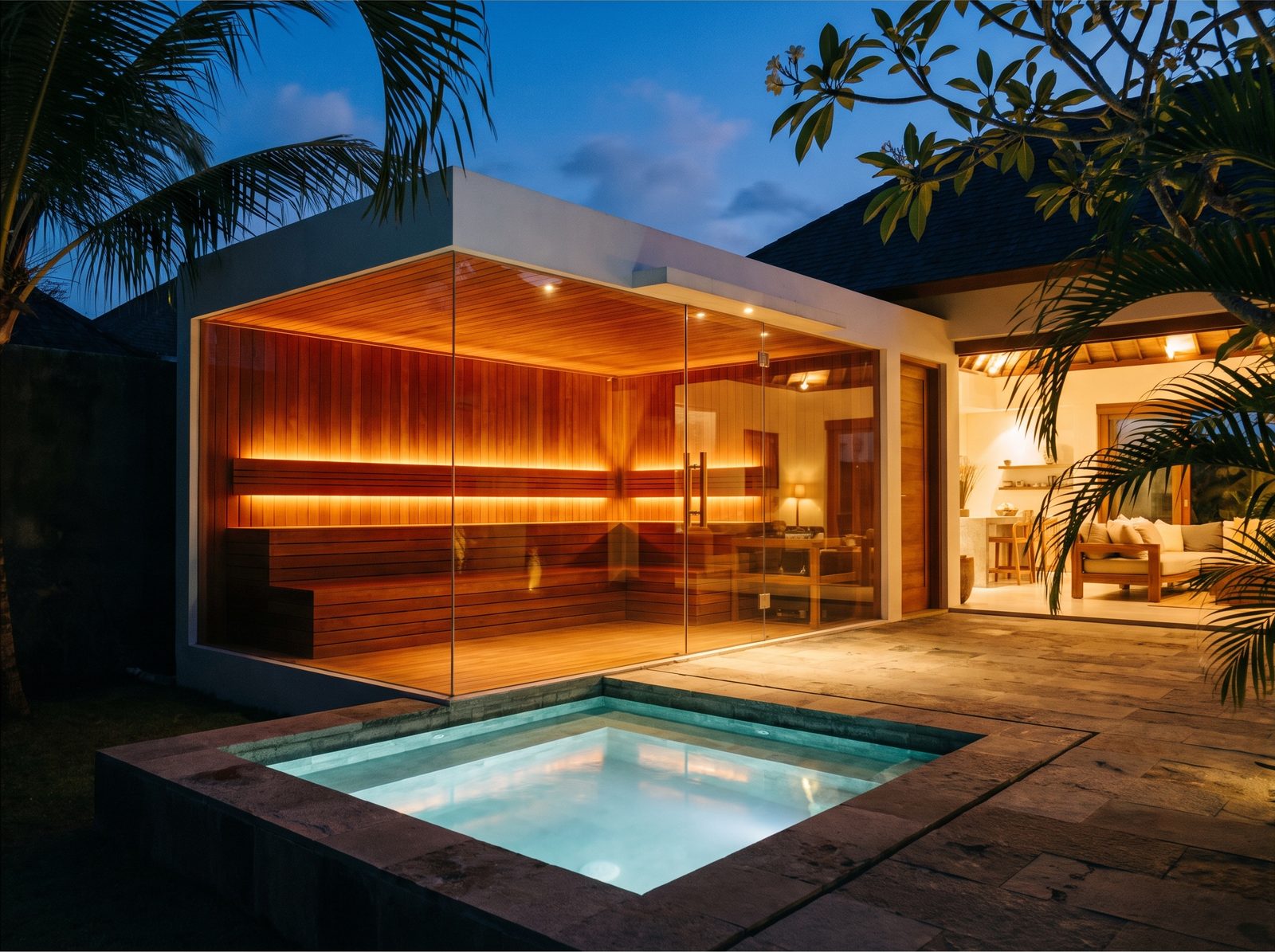
For the room you already have, the corner nothing standard fits, or the cliff edge that deserves…
Next step
Send a photo of the spot and rough dimensions. You get a layout, a heat-load calculation and a fixed price — usually within two working days.