Cold8 min
Ice bath temperature: why colder is not better
Ice bath temperature isn't a race to the lowest number. The 8–12°C working range, a 15°C beginner entry, and…
Practice
Sauna safety in plain terms: how long to stay in, hydration, alcohol, who should see a doctor first, and the warning signs that mean it is time to get out.
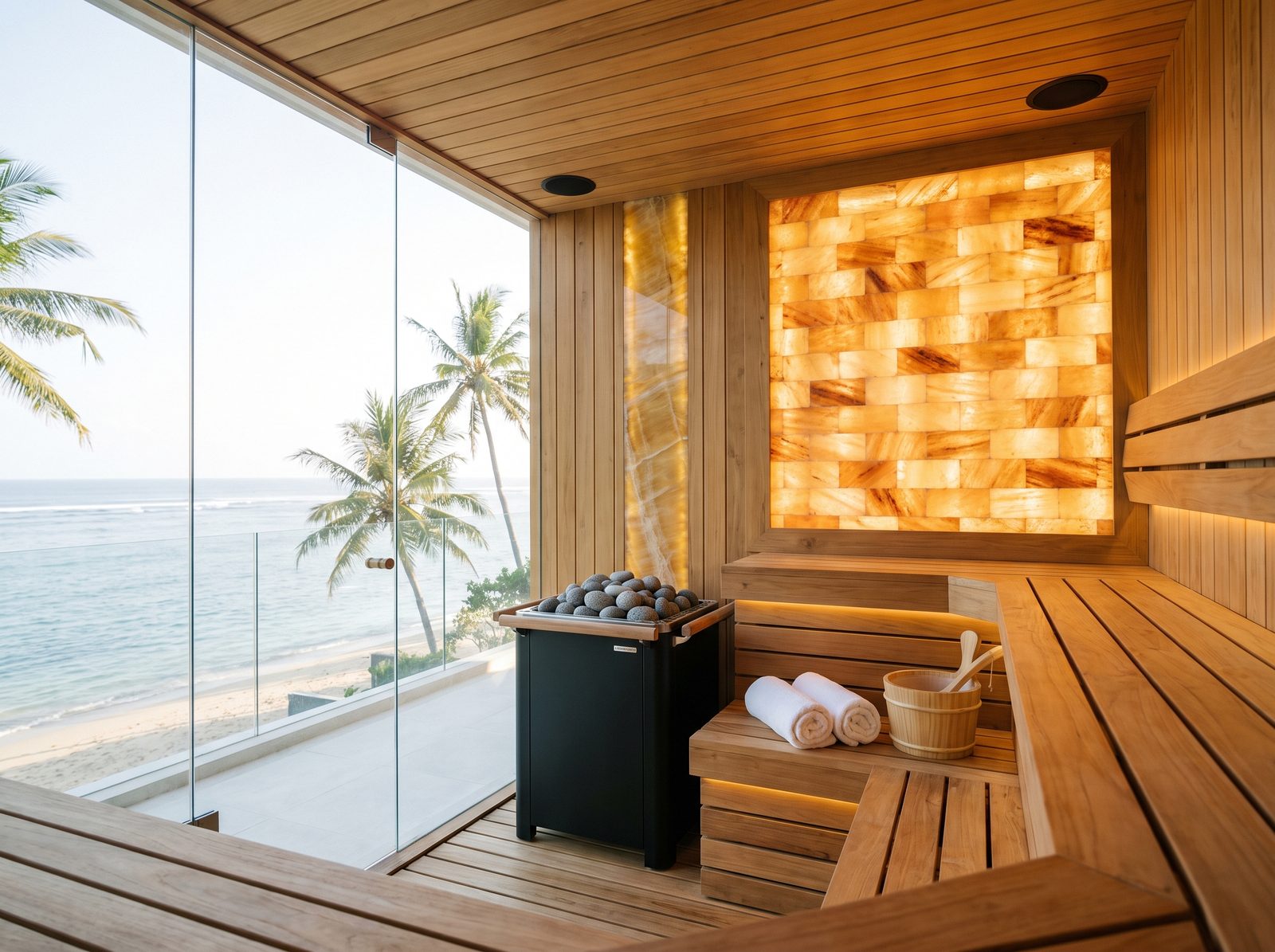
Sauna safety comes down to a short list of rules that matter far more than any of the finer details of temperature or timber. Keep sessions reasonable, hydrate properly, never mix heat with alcohol, treat pregnancy and cardiovascular conditions as a conversation with a doctor rather than a guess, never let a child or an adult use a hot room alone, and know the handful of warning signs that mean you get out immediately.
None of this is medical advice. It is general, practical guidance for healthy adults using a sauna sensibly, and anyone with an existing health condition should treat the notes below as a starting point for a conversation with a doctor, not a substitute for one.
Ten to twenty minutes is the practical range for a traditional hot room at 80–100°C, and most people find that around fifteen minutes is enough for a full round before stepping out. Two to three rounds in a single visit, with a proper break between each one, is a sensible upper limit for a healthy adult — a target to stop at, not a target to push past because you feel fine so far.
Bench height changes this without most people noticing at the time. The difference between the lower and upper bench is roughly 10°C, so fifteen minutes on the top bench is a meaningfully hotter fifteen minutes than the same time spent lower down. If you are new to a particular room, start on the lower bench and move up only once you know how that specific room's heat actually feels on your body.
Infrared cabins run cooler, at 45–60°C, and are commonly used for longer sessions as a result. The time guidance is different because the heat itself is different — the underlying caution about listening to your body applies exactly the same way in either room.
Sweating in a hot room is a genuine fluid loss, and starting a session already dehydrated — after a long day in the sun, after exercise, or simply from not having drunk enough water that day — makes that loss harder on your body for no good reason. Drink water before a session, keep a bottle within reach between rounds, and rehydrate properly afterwards rather than treating thirst as something to deal with later.
Plain water is usually enough for an ordinary session. If you have been sweating heavily beforehand — training, working outside, a day in the sun — something with electrolytes in it is a reasonable addition, not because a sauna demands it but because you were already running a fluid deficit before you opened the door.
If you are already thirsty, light-headed or sun-flushed before you have even opened the sauna door, that is your cue to rehydrate and wait, not to sauna through it.
This matters more in a tropical climate than people visiting from cooler places tend to expect, because the ambient heat and humidity outside the sauna are already asking something of your body before a hot room adds to it.
Alcohol and heat exposure do not mix, and this is not a soft recommendation dressed up as a rule — it is a genuine safety issue. Alcohol affects blood pressure and the body's ability to regulate its own temperature, impairs the judgement you need to notice early warning signs, and increases the real risk of dehydration, fainting and falls in a hot room or on wet decking around a plunge.
The same applies in the other direction with cold. A cold-water shock response is not something to test while reflexes or judgement are impaired, and combining alcohol with a cold plunge carries its own separate risk around breathing and heart rate that has nothing to do with how relaxed you feel.
If alcohol is part of the evening, the sauna comes before the first drink, not after — and never as a way to counteract drinking that has already happened.
There is no safe amount that makes either combination fine, and no session that is worth the risk. Save the sauna and the plunge for before the drinks, not after them, and never during.
Anyone who is pregnant, has a cardiovascular condition, has blood pressure problems, or has any other condition affecting the heart, circulation or temperature regulation should speak to a doctor before using a sauna or a cold plunge — before a first session, not afterwards to report how it went. This is not a box-ticking caution. Heat and cold both place a real, measurable load on the cardiovascular system, and a session that is entirely sensible for one person can be genuinely unsuitable for another with a condition that is not visible from the outside.
This applies whatever form the heat or cold takes: a traditional hot room, a gentler infrared cabin, or a cold plunge at the other end of the cycle. It also applies to anyone taking medication that affects blood pressure, heart rate or fluid balance — again, a question for the prescribing doctor, not a guess made at the sauna door.
A doctor who knows the specific person and condition is the right authority on what is sensible. We would always rather lose a booking than have someone use a sauna or plunge against medical advice they already had, or without advice they should have sought first.
Children can use a sauna, but shorter sessions, lower benches and closer supervision than you would give an adult are the rule, not a cautious exception. A child's body regulates heat differently from an adult's — generally less efficiently — so what feels like a comfortable round for a parent can be a longer, hotter exposure than is sensible for a child sitting on the same bench.
A few minutes on the lower bench, always with an adult present in the room throughout, is a reasonable starting point, and there is no version of a hot room that is appropriate for a young child left in it alone. If a child is uncomfortable, unusually flushed, or asking to leave, that is the session ending immediately, not a moment to encourage them to sit it out.
Very young children and infants are generally better kept out of a hot sauna altogether — their temperature regulation is the least developed of any age group, and a family sauna is better built around adults and older children, with a separate plan for anyone too young to reliably say how they are feeling.
Nobody should use a hot room or a cold plunge completely alone, at any temperature and at any age. This is the simplest rule in this entire article and, in our experience, the easiest one to quietly ignore — usually late at night, or once a session starts to feel routine rather than something to think about. The reason it matters is straightforward: the warning signs in the next section, dizziness, faintness, disorientation, are precisely the situations where you need another person present to notice something is wrong and act on it.
This is true at a private villa as much as anywhere else, and arguably more true there, because there is no attendant, no other guest and no one nearby to notice if something goes wrong behind a closed door. Tell someone in the house you are going in, leave a door unlocked, or go with someone else entirely. It costs nothing, and of every rule in this article, it is the one with the least excuse for being skipped.
A handful of signs mean a session ends now, not at the end of the round you were counting down to:
Any one of these is a reason to leave the hot room immediately, sit or lie down somewhere cool and shaded, and drink water steadily rather than all at once. Most people feel noticeably better within a few minutes of leaving the heat and cooling down. If symptoms do not settle within that time, or get worse rather than better, treat it as a medical situation and get help rather than waiting to see how it develops.
This is general guidance meant to help you act quickly, not a diagnostic list, and it does not replace calling a doctor — or emergency services, if the situation genuinely warrants it — when something feels seriously wrong.
None of these rules are complicated, and none of them ask you to give anything up. Reasonable session lengths, proper hydration, no alcohol, medical advice sought where a condition warrants it, real supervision for children, never using a hot room or plunge alone, and knowing the warning signs — that is the complete list, and it applies whether you are stepping into a traditional sauna, a gentler infrared cabin, or a cold plunge on the other side of the cycle.
Most people who follow this list have no issues at all and simply enjoy a hot room or a cold plunge as a normal, sensible part of life on this island. The rules exist for the exceptions, not because a sauna is inherently risky when used sensibly by a healthy adult who is paying attention to how they feel.
This guidance is general and does not replace a conversation with a doctor about your own health or a specific condition. If you are planning a sauna or wellness space for a home, villa or property and want to talk through layout, session use, or how a hot-cold routine is typically structured, get in touch, or read more about how we build.
Common questions
Ten to twenty minutes per round is the practical range for a traditional 80–100°C hot room, with most people comfortable around fifteen. Two to three rounds in a session, with a proper break between each, is a sensible upper limit for a healthy adult. This is general guidance, not a target to push past.
No. Alcohol affects blood pressure and your body's ability to regulate its own temperature, impairs judgement, and increases the risk of dehydration, fainting and falls. This applies before, during and after a session, and to cold plunges as well as hot rooms. There is no amount that makes the combination safe.
Anyone who is pregnant should speak to a doctor before using a sauna or cold plunge, rather than deciding based on general guidance alone. Heat and cold both place a real load on the cardiovascular system, and what is appropriate depends on the individual pregnancy. This is a medical question, not a house rule we can answer generally.
Yes, with shorter sessions, lower benches and closer supervision than an adult needs. A child's body regulates heat differently, so a round that feels comfortable for a parent can be more intense for a child on the same bench. Very young children and infants are generally better kept out of a hot sauna altogether.
Dizziness or feeling faint, nausea or a pounding or irregular heartbeat, a headache starting or worsening, confusion or unusual disorientation, and skin that stops sweating and feels hot and dry are all reasons to leave immediately, cool down in the shade, and drink water. If symptoms do not settle quickly, treat it as a medical situation.
Keep reading
More from the journal on heat, cold and the specific ways this climate breaks things.
All 19 guidesCold8 min
Ice bath temperature isn't a race to the lowest number. The 8–12°C working range, a 15°C beginner entry, and…
Technical8 min
Sauna electrical requirements in Lombok: PLN supply tiers, single vs three-phase, cable sizing, RCD earthing,…

Wellness Zones8 min
Wellness zone design is a circulation problem: the order of hot room, plunge and rest, the distances between…
Next step
Send a photo of the spot and rough dimensions. You get a layout, a heat-load calculation and a fixed price — usually within two working days.