Cold6 min
Ice bath vs cold shower: why immersion wins
Ice bath vs cold shower isn't close once you factor in surface area, and in Lombok, where tap water runs…
Cold
Ice bath temperature isn't a race to the lowest number. The 8–12°C working range, a 15°C beginner entry, and why below 5°C needs supervision.
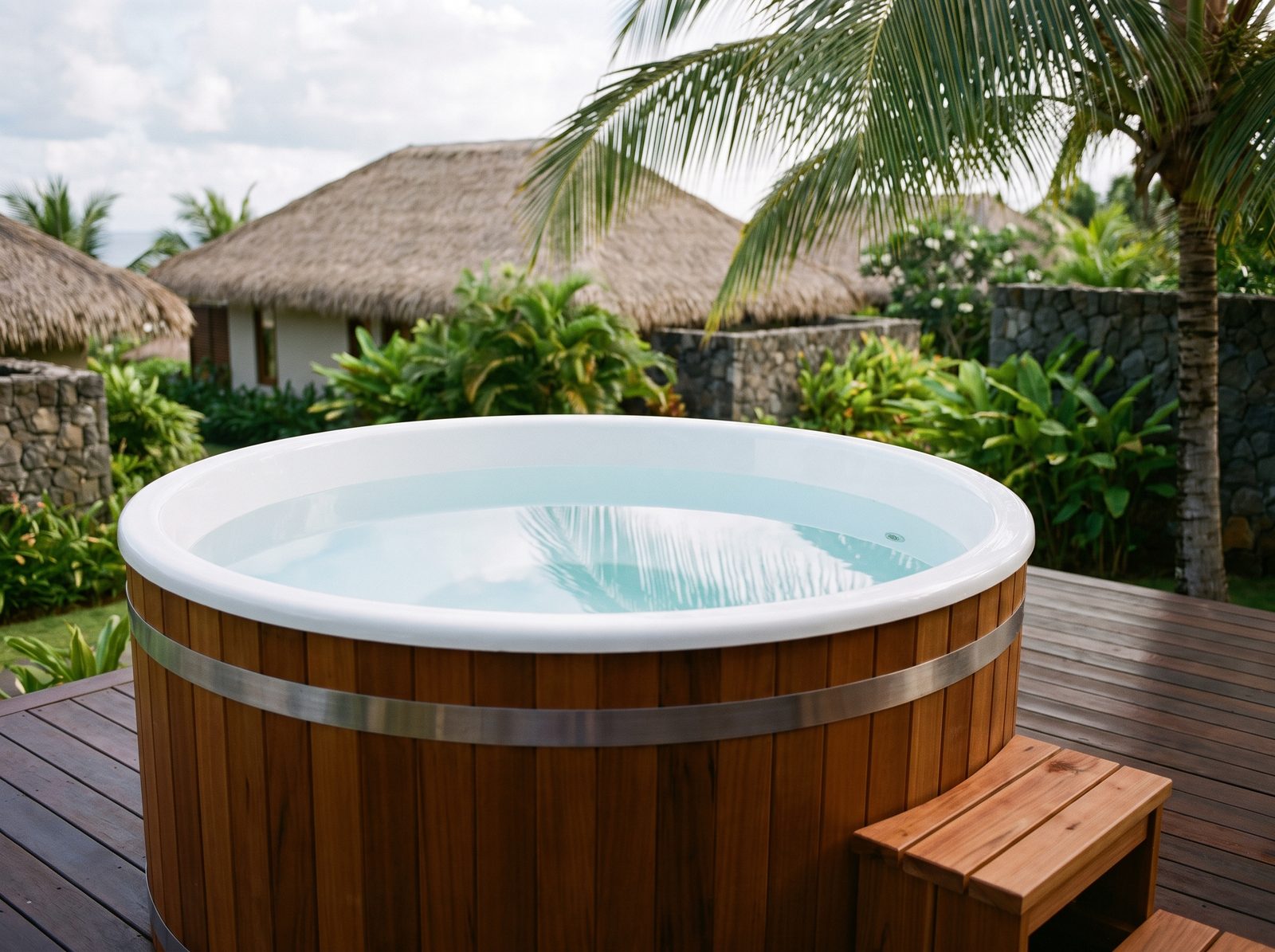
The working range for a home or villa ice bath is 8–12°C. That's cold enough to trigger a genuine cold-water response — fast, shallow breathing for the first half-minute, a hard constriction in the skin's blood vessels, a jolt of alertness that can last for hours — without needing a spotter standing by with a rescue plan. Most people asking about ice bath temperature are really asking a different question: is colder better? It isn't. Past roughly 8°C, additional cold buys less time in the water and more risk, not more benefit.
This guide sets out that working range in detail: why 15°C is the right entry point for a first session, why anything below 5°C belongs to supervised, specialist use rather than a villa deck, and the one variable that matters more than the number on the thermometer — how long you actually stay in at that temperature. We build ice baths and chilled cold plunges across Lombok, and temperature drift is the single most common complaint we get called out to fix.
8–12°C is where we fill and hold tubs for regular adult use, and it's a narrower band than most first-time buyers expect. At the top of it, 12°C, the water feels sharply cold but is tolerable for several minutes even for a beginner. At the bottom, 8°C, the constriction reflex is much stronger and most people are counting down from the moment they sit down.
Where you land inside that band should be a personal decision made over several sessions, not a target picked off a spec sheet on day one. We set new installations to hold 10°C as a default and let the owner adjust up or down once they know how their body responds.
Holding any number in that band steady, in a villa sitting in 28–32°C ambient air, is a harder engineering problem than it looks. A tub reading a clean 10°C at 7 a.m. can drift several degrees warmer by mid-afternoon without the right equipment and insulation behind it — a subject we cover in full in our guide to sizing an ice bath chiller for the tropics.
The instinct to chase a lower number is common, and on the physiology, it's wrong. Once water is cold enough to produce the vasoconstriction and alertness response — and 12°C already does that — going colder does not scale the effect up proportionally. What it does reliably do is shorten the safe duration and raise the risk of losing fine motor control in your hands before you're ready to get out.
The installs we get called back to fix are almost never "not cold enough." They're tubs someone pushed to 4–5°C chasing a number they'd heard was more serious, then stopped using because every session became something to endure rather than something to want to repeat.
Very cold water also numbs faster than it looks like it will. Grip strength and finger dexterity drop within the first minute or two at the low end of the range, which matters directly for anyone using a ladder or steps to exit unassisted. A plunge you can't confidently climb out of is a plunge that's colder than it needs to be.
None of this means 8°C is unsafe when it's built and used properly. It means the extra two or three degrees below that buy very little and cost real margin, which is why we don't spec tubs colder than the working range for casual or villa use.
A single temperature number is a poor description of an ice bath session on its own. 12°C for six minutes and 8°C for ninety seconds can produce a broadly similar physiological jolt; temperature and duration trade against each other, and treating either one in isolation misses the point.
| Water temperature | Typical session length | Who it suits |
|---|---|---|
| 15°C | 3–6 min | First-timers, beginner entry point |
| 10–12°C | 2–4 min | Regular users, most villa installs |
| 8–10°C | 1–3 min | Established cold-water habit |
| 5–8°C | under 1 min | Experienced users, supervised |
| Below 5°C | seconds, not minutes | Specialist use, supervised only |
Treat these bands as a starting point rather than a target. They describe what most healthy adults tolerate once accustomed to cold water, not a schedule to push through on a first attempt. Shivering hard, gasping, or losing the ability to speak clearly are all signals to get out immediately, regardless of how long the clock says you have left.
The practical implication for anyone building a tub at home: it's worth putting as much thought into a simple waterproof timer at the plunge as into the chiller itself. Guessing at elapsed time in cold water is unreliable — a minute feels considerably longer once your feet are in 10°C water than it does standing beside it.
15°C is where we tell first-time users to start, including guests at the villas and surf camps we build for. It's cold enough to be unmistakably a cold plunge rather than a cool bath, and forgiving enough that a nervous first-timer can complete a full session rather than bailing out after ten seconds and deciding cold water isn't for them.
The pattern we see over and over: someone tries a sub-10°C tub on day one because that's the number they've heard is "real," lasts twenty seconds, and doesn't come back. Someone else starts at 15°C, does three sessions in a week, and is asking to have the chiller turned down by the second month. Tolerance to cold water builds quickly with repetition; it does not build at all if the first experience is unpleasant enough to be the only one.
For a villa or hotel installation specifically, 15°C also widens who the plunge is actually for. A guest profile that includes people in their sixties, first-time visitors, or anyone unsure how their body handles cold water is far better served by a plunge that defaults to a gentle entry point and can be turned colder by request than one permanently set for the most enthusiastic guest.
We do not size or fill villa and home installations below 5°C, and we'd advise against it for anyone without direct, supervised experience at that end of the range. Below 5°C the margin for error compresses fast: the numbness and grip loss described above arrives in seconds rather than minutes, and the cold shock response is stronger and harder to manage through breathing alone.
This is genuinely specialist territory — the domain of experienced cold-water swimmers and supervised clinical or athletic settings, not a number to aim for because it sounds more serious than 10°C. A tub that never goes below 8–10°C and gets used three times a week delivers more than a tub set to 3°C that gets used once and then avoided.
If a project genuinely calls for sub-5°C capability — certain elite athletic training setups are the main case we see — that changes chiller sizing, insulation spec, and the safety protocol around the tub substantially, and it's a conversation we have directly rather than a default we build to.
The first thirty seconds in cold water are the highest-risk part of any session, and the mechanism is cold shock rather than low body temperature. Sudden cold contact against the skin triggers an involuntary gasp, a sharp spike in heart rate and blood pressure, and a period of fast, uncontrolled breathing that most people describe as feeling briefly like panic.
Cold shock, not a drop in core temperature, is what makes the first half-minute the dangerous part of a cold plunge — which is exactly why entry technique and supervision matter more than the exact number on the thermometer.
Slow, deliberate entry helps: lowering in over several seconds rather than jumping, and consciously slowing the breath rather than letting it race, both blunt the gasp response. This is practical technique, not medical instruction, and it doesn't remove the reflex — it gives you a way to work with it instead of being caught by it.
This is also the argument for never plunging alone. The highest-risk moment of the entire session is over within thirty to sixty seconds of entry, and it's precisely the moment where having someone nearby costs nothing and matters most if something goes wrong.
Anyone with a cardiovascular condition, blood pressure issues, or who is pregnant should talk to a doctor before starting cold plunge use, no exceptions. The blood pressure and heart rate spike that cold shock produces is a real cardiovascular event, and it isn't something to test for the first time alone on a villa deck.
Never use an ice bath alone, and never after drinking alcohol. Alcohol impairs the body's ability to regulate temperature and blunts the judgement needed to get out when you should. Both rules apply every time, not only for beginners.
Cold exposure is commonly associated with a mental-alertness lift and, anecdotally, easier sleep later in the day for people who use it regularly — worth having, and not a reason to skip the precautions above. Many people pair a cold plunge with heat exposure for a stronger effect; our sauna and ice bath sequencing guide covers that pairing and its own safety rules in more depth. None of this is a treatment for any medical condition, and nobody should use cold exposure as a substitute for medical care or advice.
Choosing the number is the easy part; holding it is the actual engineering problem. A tub sitting outdoors in Lombok's ambient heat, under direct sun, gains warmth constantly, and an undersized chiller will drift a 10°C fill up several degrees by afternoon regardless of how carefully you picked the target. Insulation, a lid, and a correctly sized chiller decide the outcome far more than the number you set on day one.
We spec both routes depending on the site: a cedar ice bath with ice-and-drain top-ups for lighter, occasional use, and a fully chiller-fed cold plunge for daily use where holding a steady number matters. Either way, the target temperature is the first decision, not the last one — get it right and everything else, from insulation to chiller size, gets specified around it.
If you're planning an ice bath for a villa, surf camp, or wellness zone and want the working temperature matched to how it will actually be used, get in touch for a site survey — the ambient conditions on your specific plot are what determine the equipment, not a catalog default.
Common questions
8–12°C is the working range for most healthy adults, with 15°C a sensible entry point for a first session. Below 5°C is specialist territory that needs supervised, experienced use rather than a villa or home setup. Where you settle inside 8–12°C is a personal choice best made over several sessions rather than fixed on day one.
No. Once water is cold enough to trigger the vasoconstriction and alertness response — 12°C already does this — going colder adds little further benefit. What it reliably adds is numbness, reduced grip strength, and a shorter safe session length, which is why we don't build tubs colder than the working range for casual use.
Most healthy adults tolerate roughly 2–4 minutes at 10–12°C once accustomed to cold water. Treat that as a general starting point, not a target to push through — shivering hard, gasping, or losing the ability to speak clearly are all signs to get out immediately regardless of the clock.
Speak to a doctor first. Cold shock produces a genuine spike in heart rate and blood pressure in the first thirty seconds of immersion, and that isn't something to test for the first time alone. This applies to anyone with a cardiovascular condition, a blood pressure issue, or who is pregnant.
Cold shock is the body's involuntary reaction to sudden cold-water contact: a sharp gasp, fast and uncontrolled breathing for the first 30–60 seconds, and a spike in heart rate. It's the highest-risk part of any cold plunge session, which is why slow entry and never plunging alone both matter.
Keep reading
More from the journal on heat, cold and the specific ways this climate breaks things.
All 19 guidesCold6 min
Ice bath vs cold shower isn't close once you factor in surface area, and in Lombok, where tap water runs…
Cold7 min
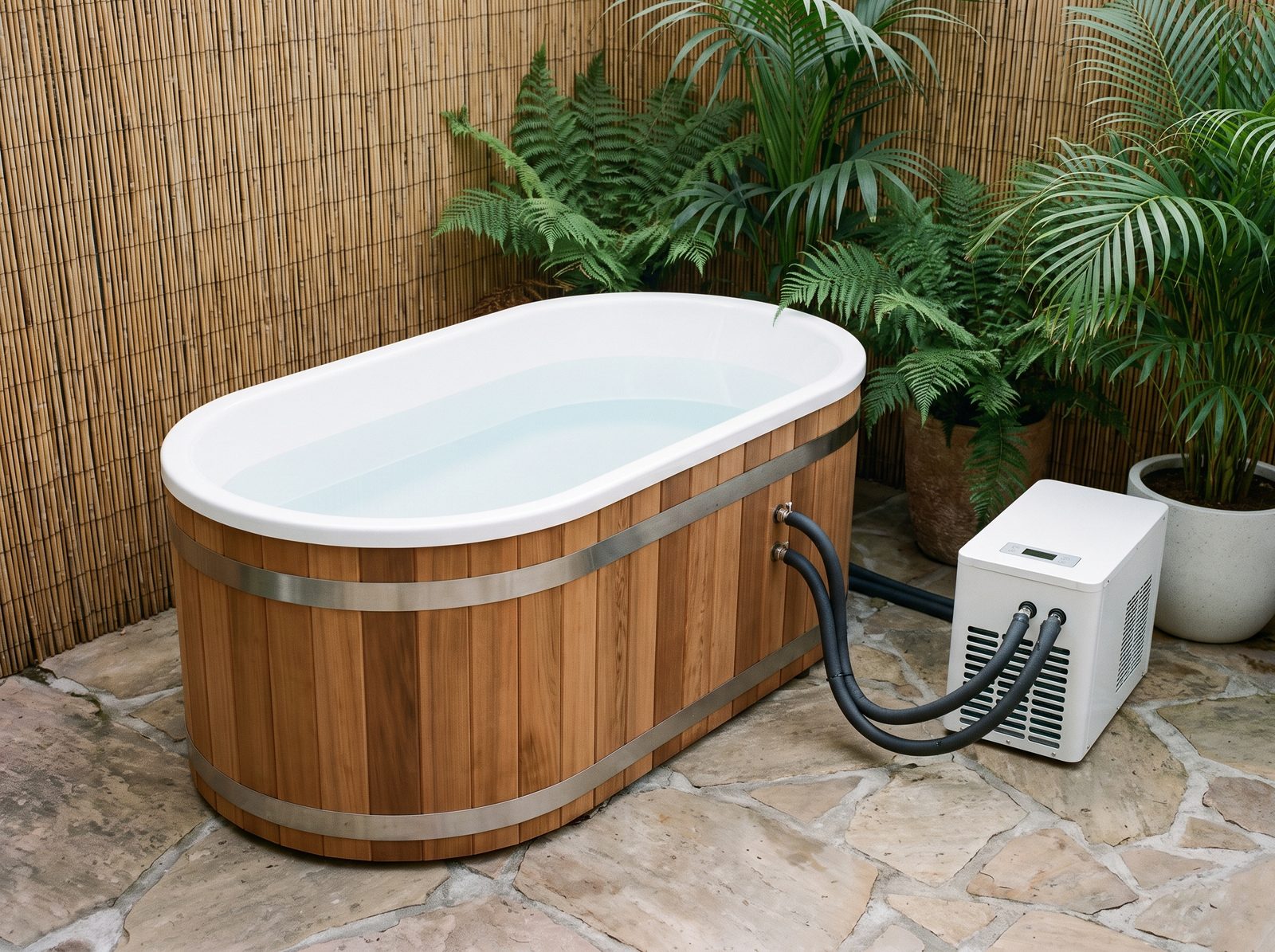
An ice bath chiller rated for Europe runs far harder in Lombok's heat. The real sizing math — heat load, HP…
Cold8 min
Cold plunge water treatment matters even though the water is cold. Filtration, ozone, UV, chlorine at 10°C,…
Next step
Send a photo of the spot and rough dimensions. You get a layout, a heat-load calculation and a fixed price — usually within two working days.