Cold8 min
Ice bath temperature: why colder is not better
Ice bath temperature isn't a race to the lowest number. The 8–12°C working range, a 15°C beginner entry, and…
Cold
Ice bath vs cold shower isn't close once you factor in surface area, and in Lombok, where tap water runs 27°C, a cold shower barely counts as cold.
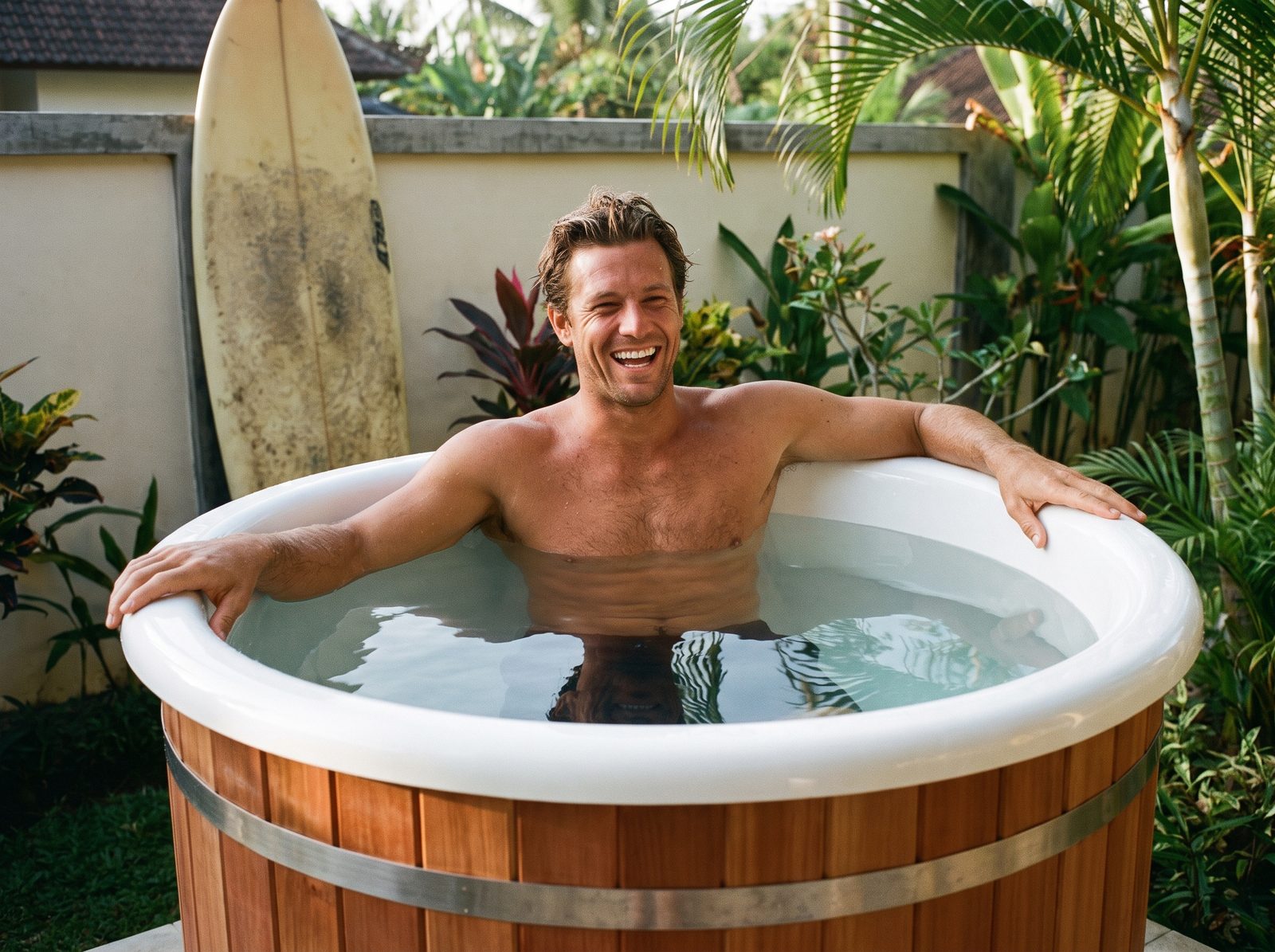
Ice bath vs cold shower comes down to one variable most people never think about: how much of your skin is in contact with cold at once, and how efficiently that cold pulls heat out of you. Full immersion puts the entire body in contact with water simultaneously; a shower wets a moving fraction of it at any instant and relies on a much weaker mechanism to move heat.
In Lombok this gap is bigger than it looks on paper, because the tap water feeding a villa shower runs around 27°C straight out of the ground — close to skin temperature, not cold by any useful definition. A "cold shower" here is a genuinely different, much weaker proposition than the same words mean in a country where tap water runs at 10–15°C.
Step into a plunge and essentially all of your skin is in contact with cold water within a second or two. Stand under a shower and only the fraction of skin the stream is currently hitting is in contact at any instant — the rest is exposed to room air, which is a far weaker conductor of heat than water.
This is not a small difference. Water conducts heat away from skin far more effectively than still air at the same temperature, which is why a swimming pool at 20°C feels much colder than a room at 20°C. A shower compounds this further by only covering part of the body's surface area at any given moment rather than all of it at once.
| Factor | Ice bath | Cold shower (temperate) | Cold shower (Lombok) |
|---|---|---|---|
| Water temperature | 8–12°C | 10–15°C | ~27°C |
| Body surface in contact | ~100% | 30–50% at once | 30–50% at once |
| Heat transfer medium | Water, full immersion | Water, partial and moving | Water, partial and moving |
| Typical session | 60–180 sec | 30–120 sec | 30–120 sec |
The practical result is that a shower needs either a much lower water temperature or a much longer duration to approach what a plunge achieves in 60–90 seconds. In most homes, neither is available, which is the crux of the comparison.
Full immersion triggers the cold-shock reflex — the sharp inhale, the spike in heart rate — almost immediately, because the nervous system reads a signal from the entire skin surface at once rather than a moving patch. That whole-body signal is what produces the strong, fast vascular response people associate with cold plunging.
A shower delivers a weaker, staggered version of the same signal. Water hits the shoulders and back, drains away, and by the time it has covered most of the body the first areas it touched have already started to warm back up from surrounding air and body heat. The reflex never gets the simultaneous, whole-body input that makes immersion distinct.
This is straightforward physics, not a hedge — heat transfer by conduction into moving water is well understood and does not depend on any physiological claim. What is genuinely uncertain is how much of the wellness benefit people report from cold plunging depends on that stronger reflex versus simply the experience of doing something deliberately uncomfortable, and that part we are honest we cannot fully separate.
In much of Europe or North America, groundwater and mains water commonly sit at 10–15°C, so a "cold shower" is a genuinely cold shower before anyone touches a mixer tap. In Lombok, tap water drawn from local ground supply typically runs close to 27°C — barely below skin temperature, and warmer than the 15°C we treat as a sensible beginner entry point for an actual ice bath.
This is the specific local fact that changes the comparison: the advice "just take a cold shower" assumes a water source Lombok does not have. A shower here, run to its coldest setting, is closer to a lukewarm rinse than to any recognised cold-exposure protocol.
We have had guests try a cold-shower-only routine after reading advice written for a cold climate, then ask why it is not doing much. The answer is almost always the same: the water was never actually cold to begin with.
Getting genuinely cold water in Lombok means active chilling, not just turning a tap, which is a different piece of equipment entirely, covered further down.
None of this makes a cold shower useless. Even a partial, lukewarm-by-plunge-standards shower is commonly associated with a quick alertness boost and is a reasonable low-cost habit for someone easing into cold exposure generally, especially somewhere without access to a proper plunge.
It is also the only option that requires no new equipment, which matters for a guest at a villa without a dedicated ice bath on site, or for anyone who wants to try the general idea of cold exposure before committing to install one.
What it does not do, in Lombok specifically, is approximate a real cold-water immersion protocol. Treat it as a mild, convenient practice rather than a substitute for the plunge temperatures covered in our contrast therapy protocols guide.
A properly chilled plunge holds a set temperature — our working range is 8–12°C — regardless of what the ground water happens to be doing that day, and delivers it to the entire body at once. That combination, consistent temperature plus full immersion, is what a repeatable cold-exposure routine actually needs.
It is also the piece that makes a genuine sauna and ice bath contrast cycle possible. The strong vascular swing that contrast therapy depends on needs a real cold step, not a lukewarm rinse, immediately after the hot one — a shower cannot supply the temperature or the full-body contact that step requires.
Cold-water immersion is a real cardiovascular stress. Anyone with a cardiovascular condition, blood pressure issues, or who is pregnant should talk to a doctor before starting, and nobody should get into an ice bath alone or after drinking alcohol.
A cedar ice bath gives you the tub and the insulation; pairing it with active chilling is what gets the water down from Lombok's warm baseline to somewhere actually cold, which is the part a shower can never replicate here.
Starting from roughly 27°C ambient water, a chiller in Lombok has a much bigger gap to close than the same unit would face in a cooler climate, and it has to keep closing that gap every time fresh warm water enters or a guest gets in and out.
As a starting point, budget around 1 HP of chiller capacity per 1,000 litres of tub volume to hold roughly 10°C reliably, and expect to spec close to double the nameplate cooling capacity you would use for the same tub in a temperate country. Insulating the tub itself carries a large share of the real-world performance — an insulated cedar tub asks much less of the chiller than an uninsulated one of the same size.
Our chiller cold plunge page goes through sizing by tub volume in more detail. The number to take away here is that "cold" in Lombok is always an actively engineered outcome, never a tap setting.
If the goal is a cheap, no-equipment habit and genuine cold immersion is not the priority, a cold shower costs nothing extra and is worth doing as a daily practice. It will not replicate a plunge, but it is better than nothing and it is already available in every villa.
If the goal is an actual cold-therapy routine — recovery after surfing or training, pairing with a sauna, or offering guests a real wellness feature — a chilled ice bath is the only version of "cold" in Lombok that reaches the temperatures the practice is built around. Given local tap water sits near 27°C, there is no shortcut version of a real plunge here the way there might be in a cooler country.
Budget is often the deciding factor: a cedar ice bath starts from IDR 42,000,000 (≈ USD 2,600) and a fully chilled cold plunge from IDR 68,000,000 (≈ USD 4,200), both indicative and confirmed only after a site survey.
Given Lombok's tap and ground water sit close to 27°C, reaching a genuine 8–12°C working range here always means a properly sized chiller and an insulated tub working together, not a fixture you can approximate with plumbing alone.
We size the tub, insulation, and chiller against your actual water source and intended use, whether that is a single villa plunge or a shared feature for a surf camp or retreat. Contact us for a site survey, or browse our ice bath range to see the options before you commit to a spec.
Common questions
For genuine cold-water immersion, yes. A shower only wets a moving fraction of the body at a time and relies on air rather than water to cool the rest, while a plunge puts the entire body in contact with cold water at once. In Lombok the gap is bigger still because tap water runs close to 27°C.
Local ground and tap water typically sits around 27°C, close to skin temperature and well above the 8–12°C working range of a proper ice bath. A shower run to its coldest setting here is closer to lukewarm than to any recognised cold-exposure protocol.
Not meaningfully without active chilling, which most homes don't have on a shower line. Even a dedicated cold-only tap still draws from the same roughly 27°C ground supply, so there is no simple plumbing fix. The practical route to genuine cold exposure in Lombok is a chilled plunge rather than trying to engineer a colder shower.
A working ice bath sits at 8–12°C; Lombok tap water runs close to 27°C. That is a gap of roughly 15–19°C, comparable to the difference between a walk-in cold room and a mild spring afternoon, which is why a local cold shower and a proper plunge are not comparable experiences.
Yes, in almost every case. Starting from around 27°C ambient water, only active chilling reliably reaches and holds the 8–12°C working range. Passive or unchilled tubs will sit far warmer than a genuine ice bath needs to be, and insulation alone cannot pull existing water down to a colder temperature.
Keep reading
More from the journal on heat, cold and the specific ways this climate breaks things.
All 19 guidesCold8 min
Ice bath temperature isn't a race to the lowest number. The 8–12°C working range, a 15°C beginner entry, and…
Cold7 min
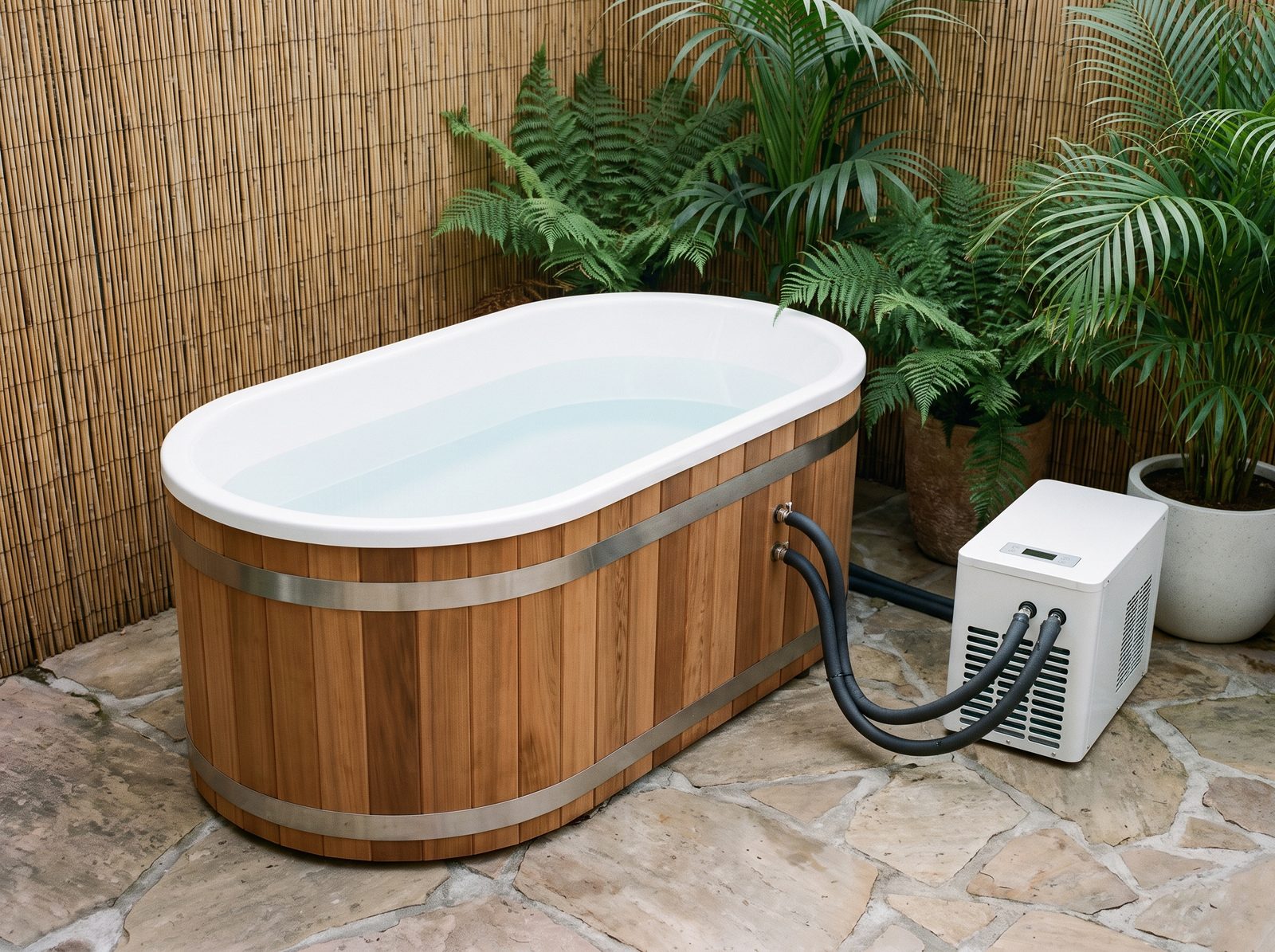
An ice bath chiller rated for Europe runs far harder in Lombok's heat. The real sizing math — heat load, HP…
Cold8 min
Cold plunge water treatment matters even though the water is cold. Filtration, ozone, UV, chlorine at 10°C,…
Next step
Send a photo of the spot and rough dimensions. You get a layout, a heat-load calculation and a fixed price — usually within two working days.