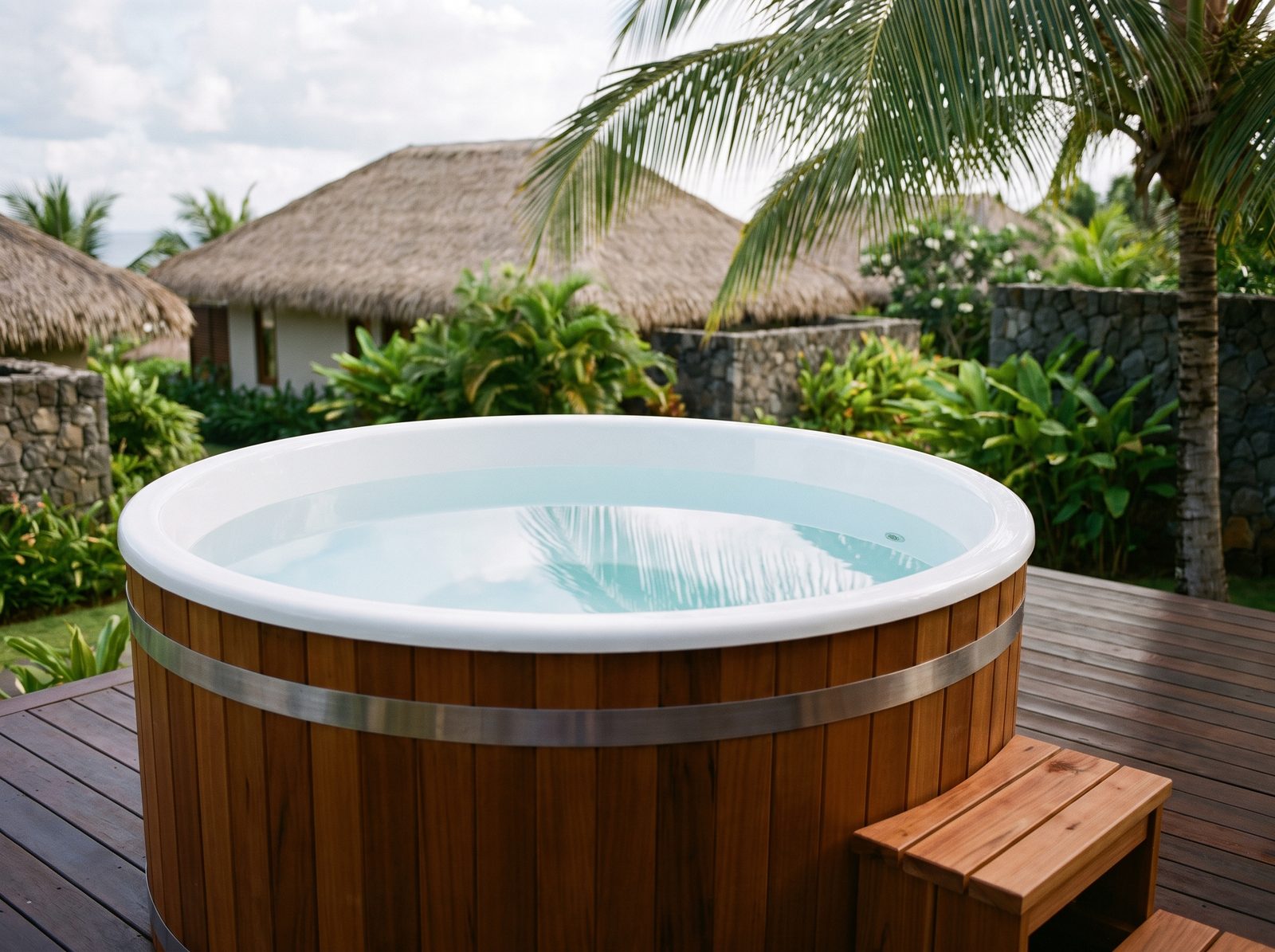
Cold8 min
Ice bath temperature: why colder is not better
Ice bath temperature isn't a race to the lowest number. The 8–12°C working range, a 15°C beginner entry, and…
Recovery
A sauna for surfers, done honestly: what heat and cold are reported to help, why rehydration comes first, and how camps time the room to the surf day.

A sauna for surfers is not a novelty add-on to a surf camp — it addresses a specific, physical problem: paddling load on the shoulders, hours of lower-back extension holding position on the board, sun exposure, and the dehydration that comes with all of it. Heat and cold are commonly reported to help how people feel afterwards and how well they sleep that night. Neither one repairs tissue, and neither replaces the basics: water, electrolytes and rest.
This is written for anyone spending real hours in the water on this coast — Kuta, Gerupuk, Ekas, Desert Point — and for the surf camps and retreat operators building recovery space around them. It comes with one firm caution up front: a sauna is not a substitute for treating an actual injury, and heat or cold used carelessly on a dehydrated body can make a good day feel a lot worse.
A long session is hours of paddling — a repetitive, overhead-adjacent shoulder movement — followed by pop-ups that load the lower back, and on a good day, hours more of direct sun exposure on top of it. None of that is unique to surfing, but the combination is: sustained upper-body load, spinal extension, heat, glare and salt water, often for three or four hours without a proper break.
Add a dawn session and an afternoon session on the same day, which is completely normal on a good swell, and the load simply stacks. Shoulders get tight, and over a season some surfers develop the kind of nagging ache that comes from repetitive overhead work in any sport — swimming, climbing, throwing sports, all of it. The lower back holds an extended position through the whole paddle and the whole pop-up, session after session, day after day.
None of this is dramatic, and it is not an injury in itself. It is ordinary, cumulative physical load, the same kind any repetitive sport produces, and it responds to the same basic things: rest, movement, and paying attention before it turns into something worse.
Four hours in tropical sun and salt water is a genuine fluid loss, and heat exposure on top of a dehydrated body is a poor combination — sauna use adds another heat load onto a system that already has less fluid to regulate itself with. If you have just come in from a long session, the sauna is the second thing you do, not the first. Water, and something with electrolytes in it, comes before the hot room, not after it.
If you are still thirsty, still sun-flushed, or have not needed the toilet since you paddled out, rehydrate and wait. A hot room stacked on top of a dehydrated body is the most common way people feel genuinely unwell after a sauna, and it is entirely avoidable with a twenty-minute delay and a bottle of water.
This is not a minor caveat tacked onto the end of the article — it is the single most important practical rule in it, and it applies whether the heat is a traditional hot room or a gentler infrared cabin running longer at a lower temperature.
People who train or surf hard commonly report that heat exposure helps them feel looser, and that cold exposure afterwards helps them feel less swollen and more alert. Sleep is the other thing that comes up often in conversation — a session that ends with heat, then cold, then a proper cool-down in the shade seems to precede a better night's sleep for a lot of people, compared with crashing on the sofa still salty and sun-baked.
None of that is a guarantee, and it is not the same thing as a treatment. These are commonly reported, subjective effects that vary a great deal between individuals, not documented outcomes with a specific number attached to them. We are not going to tell you a sauna reduces inflammation by some stated percentage or accelerates any particular biological process — that is not a claim anyone can honestly make, and we would rather say plainly that we do not know than invent a number to make the idea more convincing.
These are the two areas surfers ask us about most, and heat and cold tend to get used differently for each. Heat before or between sessions is commonly used to loosen a tight shoulder before paddling out, on the general logic that warm tissue moves more freely than cold, stiff tissue — a widely accepted idea behind most warm-up routines in any sport, not a claim specific to sauna use.
Cold, afterwards, is what most surfers reach for on a lower back or shoulders that feel swollen or genuinely sore rather than just tired — a short cold plunge, working range 8–12°C for one to three minutes, rather than a long soak that offers no particular extra benefit over a shorter one. Some people prefer to finish on heat, others on cold; there is no single correct order, and alternating between the two across a session is worth reading about in full elsewhere on the journal.
Neither hot nor cold is a substitute for the basic things that actually manage overuse load across a season: rest days, general mobility work, and paying attention when soreness stops being ordinary tiredness and starts being pain that changes how you move or paddle.
This needs to be said plainly. A sauna does not repair a torn muscle, a disc problem or a joint injury, and heat applied to an acute injury in the first day or two can make swelling worse rather than better. If something is swollen, sharply painful, numb, or not moving the way it normally does, that is a conversation with a doctor or physiotherapist, not a booking with us.
Heat and cold are recovery tools for ordinary training load, not a substitute for diagnosis. We would rather tell a client to see a doctor than sell them a session that was never going to help.
Anyone with a cardiovascular condition, blood pressure problems, or who is pregnant should speak to a doctor before using heat or cold exposure at all, and nobody should use either alone or after drinking alcohol. This applies to every session, injury or not, and it applies as much to a fit twenty-five-year-old surfer as to anyone else.
A sensible order, once you have actually rehydrated: rinse off salt and sand, warm up in the hot room for ten to fifteen minutes, take a short cold plunge for a minute or two, then rest properly in the shade before deciding whether to repeat it. Two rounds is plenty after a hard session, and there is no particular virtue in pushing to a third. The full underlying sequence is covered in our guide to contrast therapy, with the specific timing laid out in contrast therapy protocols.
None of these steps needs to be exact to the minute. The order matters more than the precision — rehydrate, heat, cold, rest, in that sequence, every time.
Individual surfers renting a villa near the breaks are one customer, but the more common conversation is with surf camps, retreat operators and guesthouses along this coast who want shared recovery space for guests. For a business like that, a sauna and plunge are not a spa amenity bolted on for the brochure — they are working infrastructure with a timetable, and the timetable is set by the ocean. Dawn patrol empties the property by six. The heavy demand lands when everyone comes back in the late afternoon, salty and sun-tired, and again after dinner.
Group use changes the specification in practical ways: bench capacity for several guests at once rather than a couple, a plunge sized and filtered for repeated daily use rather than the occasional private dip, and a rinse-off point placed where people will actually use it before the hot room or the plunge — this coast sends every guest back carrying salt and sand.
It also changes the maintenance conversation. A camp running a shared sauna and plunge every single day, a few hundred metres off a surf beach, needs the commercial routine — fixings, hardware and water checked on the tighter cycle — not the lighter touch a private villa can get away with.
If you run a surf camp, guesthouse or small retreat, the design brief is scheduling as much as sizing. The room should be at temperature by the time the afternoon session ends, run in bookable rounds through the evening, and recover between groups — which argues for a compact, fast-recovering cabin over one large hall, and for a heater schedule the staff run rather than remember. Lighting and a covered path matter more than at a villa, because most guest sessions happen at dusk or after dark.
That is a wellness zone conversation as much as a single-sauna one: rinse first, heat, plunge, shaded rest, in an order guests follow without being told. Send us the site and a rough sense of daily guest numbers, and a survey gives you a layout and a fixed price built around actual expected usage rather than a residential assumption that will not survive real guest traffic. For most surf-coast sites around Kuta Lombok that starts with a straightforward hot room and plunge sized for the numbers you actually expect, and scales as the camp grows.
Common questions
Heat and cold are commonly reported to help people feel looser and sleep better after hard physical activity, surfing included. Neither is a guaranteed fix, and neither replaces rest, hydration and basic mobility work. Used sensibly, after rehydrating rather than instead of it, many surfers find a hot-cold routine a useful part of an after-surf routine.
Rehydrate first. Several hours in tropical sun and salt water is a real fluid loss, and adding sauna heat on top of a dehydrated body is the most common way people feel unwell afterwards. Drink water and something with electrolytes, wait until you feel properly rehydrated, then sauna and plunge as normal.
No. A sauna does not repair a torn muscle, a disc problem or a joint injury, and heat on a fresh, acute injury can make swelling worse rather than better. Ordinary muscle tiredness from paddling and pop-ups is a reasonable use case; anything swollen, sharply painful or not moving normally needs a doctor, not a sauna session.
Our working range is 8–12°C, with a short one-to-three-minute plunge being typical after a session. Fifteen degrees is a sensible entry point if you are new to cold water. Below 5°C moves into specialist territory that needs supervision and is not necessary for ordinary recovery use.
Yes, this is one of our most common commercial conversations. Surf camps and small guesthouses along the coast typically want a shared recovery space sized for daily group use rather than occasional private use, with bench capacity, plunge filtration and a maintenance routine built around real guest numbers.
Keep reading
More from the journal on heat, cold and the specific ways this climate breaks things.
All 19 guidesCold8 min
Ice bath temperature isn't a race to the lowest number. The 8–12°C working range, a 15°C beginner entry, and…
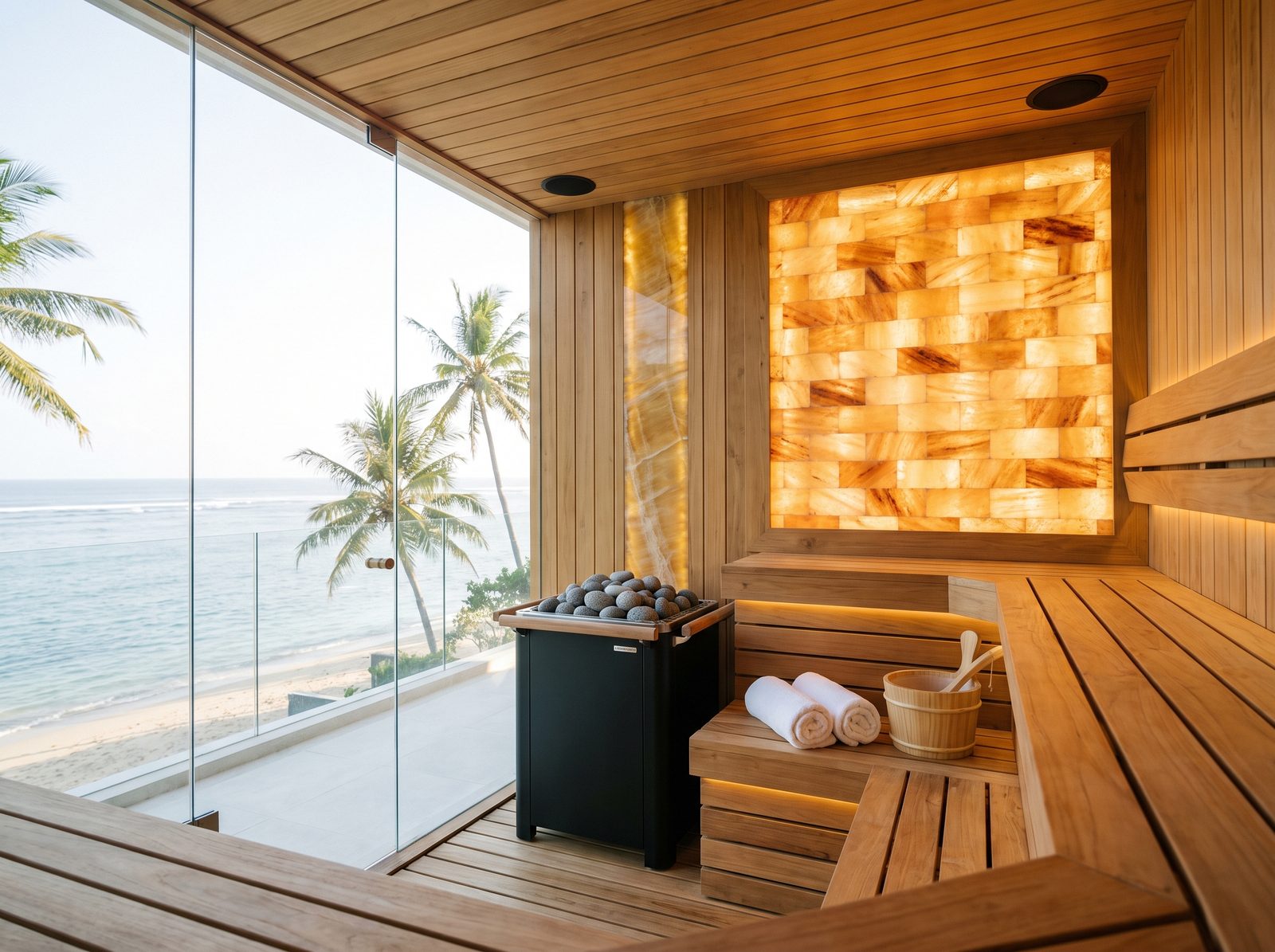
Technical8 min
Sauna electrical requirements in Lombok: PLN supply tiers, single vs three-phase, cable sizing, RCD earthing,…
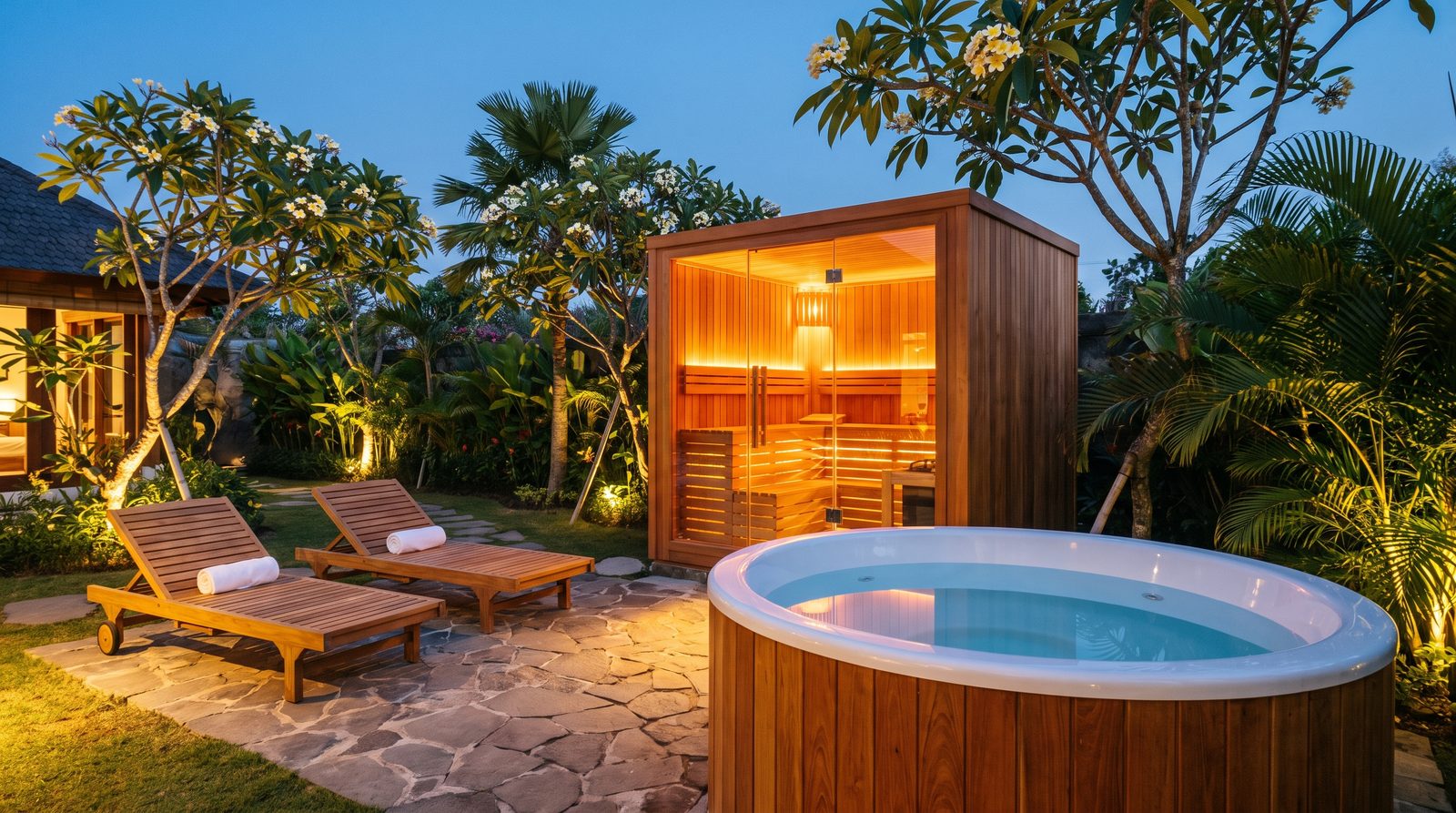
Wellness Zones8 min
Wellness zone design is a circulation problem: the order of hot room, plunge and rest, the distances between…
Next step
Send a photo of the spot and rough dimensions. You get a layout, a heat-load calculation and a fixed price — usually within two working days.