Buying8 min
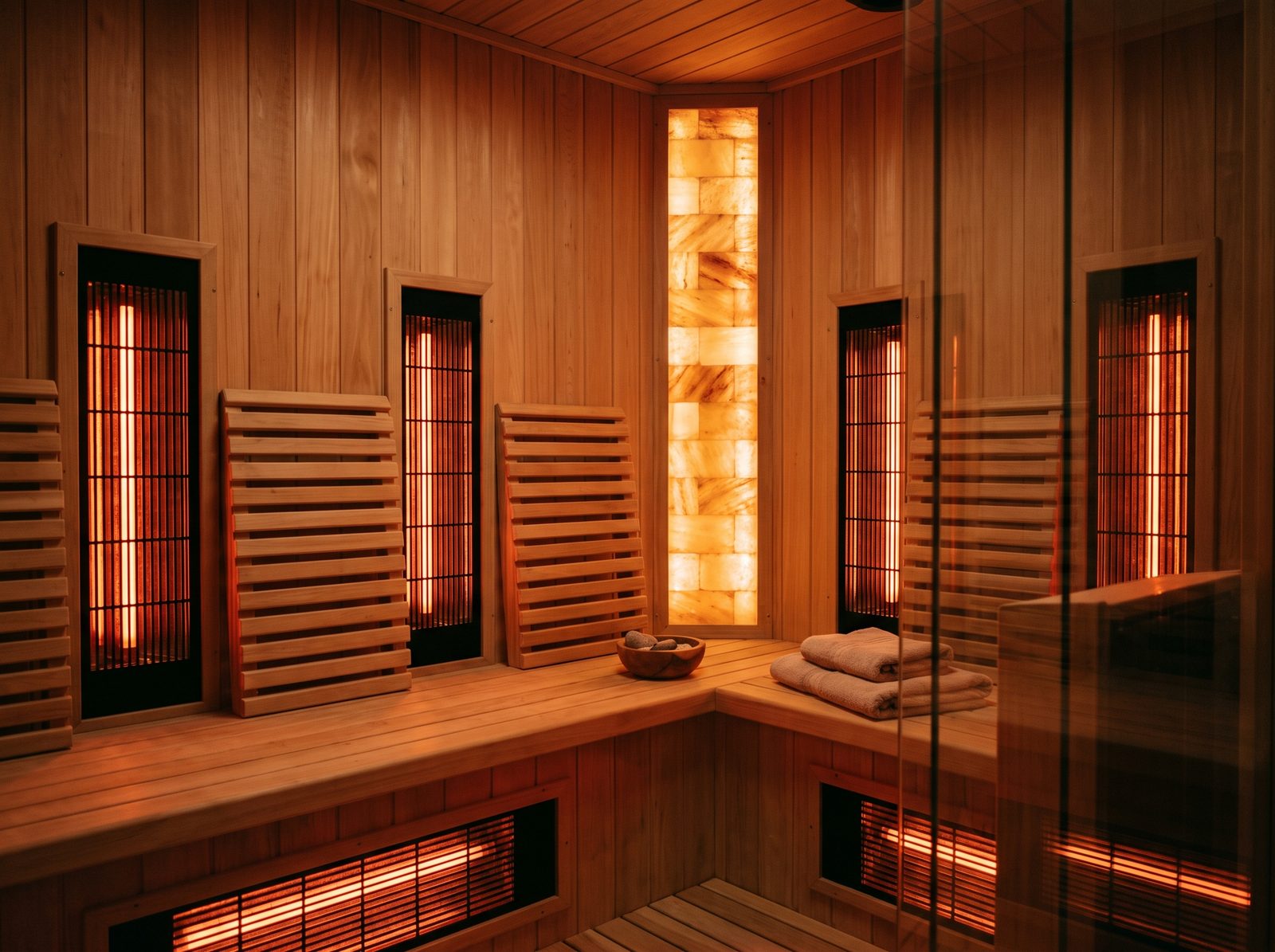
Infrared vs traditional sauna: two different machines
Infrared vs traditional sauna, compared honestly: how each heats you, what each draws from Lombok's weak…
Buying
Sauna cost Lombok, honestly broken down: heater, electrical upgrade, foundation, drainage, glass and freight, all itemised with indicative prices.
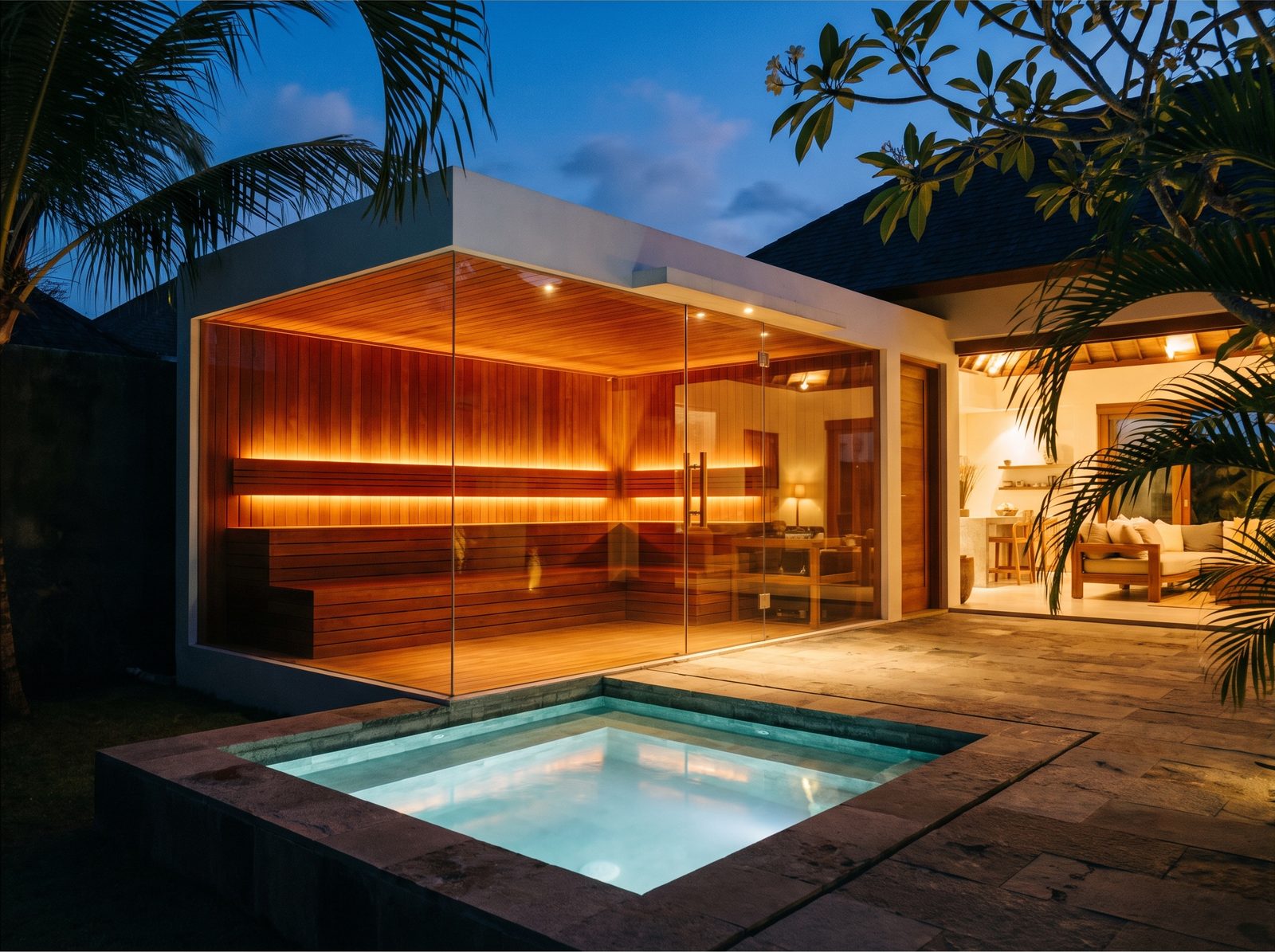
Sauna cost Lombok, in short: more than the cabin price alone. Budget the cabin at roughly IDR 125,000,000 (≈ USD 7,700) for a standard outdoor cabin sauna, and treat that figure as the starting line rather than the finish. By the time electrical work, foundation, drainage, glass and freight are added, the cabin structure usually accounts for only 55–65% of what lands on the final invoice.
That gap is not markup. Every added line exists because of where the build is happening, not because of padding. This guide breaks a Lombok sauna cost into its real parts — heater, power supply, foundation, drainage, glass, freight, installation and commissioning — with indicative ranges for each, so the number you plan around is the number you actually pay near.
Looking for the unit prices themselves? They are on the full sauna and ice bath price list; this guide explains what moves the final figure.
The indicative prices on our price list cover the sauna structure and a standard heater matched to the room's volume — roughly 1 kW per m³ for a well-insulated cabin, plus an allowance for any uninsulated glass. An outdoor cabin sauna starts from IDR 125,000,000 (≈ USD 7,700), an infrared cabin from IDR 52,000,000 (≈ USD 3,200), and a custom built-in sauna from IDR 165,000,000 (≈ USD 10,200). Inside that structure price sits an insulated wall and ceiling build, a bench in thermally-modified aspen or Western red cedar, a door, and the standard control unit for the heater.
Most price lists on the island show only that cabin figure, because it is the easiest number to advertise. It is not the number you will pay if you also want water directed away from the deck, a heater that runs safely on the power you actually have, and a crew who can get the whole thing to your plot in one piece. What the price does not include is anything upstream or downstream of the box itself: getting power to it, giving it a stable base to sit on, keeping water away from it, and getting it from a factory to your plot.
On a flat, accessible villa site with existing 3-phase power, those extras are modest. On a sloped block with single-phase PLN and no existing deck, they are not — and that gap is exactly what the rest of this guide prices out.
The table below itemises a typical delivered cost for a standard outdoor cabin sauna on a private villa site. Every figure is indicative — the actual number depends on your site, and only a survey fixes it precisely. We are publishing it because most quotes on the island quietly leave several of these lines out until the invoice stage.
| Item | Indicative range (IDR) | Approx. USD |
|---|---|---|
| Cabin structure and standard heater | from 125,000,000 | ≈ 7,700 |
| Electrical supply upgrade | 15,000,000 – 35,000,000 | ≈ 900 – 2,150 |
| Foundation and deck | 18,000,000 – 32,000,000 | ≈ 1,100 – 2,000 |
| Drainage | 6,000,000 – 14,000,000 | ≈ 400 – 850 |
| Glass upgrade (full-height panel) | 10,000,000 – 22,000,000 | ≈ 600 – 1,350 |
| Freight to site | 7,000,000 – 16,000,000 | ≈ 450 – 1,000 |
| Installation and commissioning | 10,000,000 – 18,000,000 | ≈ 600 – 1,100 |
| Typical delivered total | 191,000,000 – 262,000,000 | ≈ 11,800 – 16,200 |
The two lines clients most often forget to budget are drainage and the electrical upgrade — both invisible until a crew is on site and finds a slab with no fall, or a meter box already at capacity.
Two things move a build from the low end of that range to the high end: how much electrical work the existing supply needs, and how far freight has to travel once it clears the port. A villa with 3-phase already installed and a driveway to the door sits near the bottom. A remote block with single-phase power and a long, awkward final approach sits nearer the top.
Most villas run single-phase PLN power, which comfortably handles lighting, pumps and kitchen appliances but struggles with a concentrated heater load. A heater under about 6 kW is usually fine on a well-specified single-phase supply. Above that, plan on either a 3-phase connection or a dedicated upgraded single-phase feed from the meter, both of which PLN treats as separate works with their own timeline and paperwork.
We quote electrical supply upgrades as a distinct line item, never folded into the sauna price, because the answer depends entirely on what is already at the property. A villa built in the last five years with 3-phase already in the wall is a different job from an older house on a shared single-phase line. PLN upgrade applications typically add one to three weeks to the overall timeline, which is why we recommend starting that paperwork as soon as a heater size is confirmed, rather than waiting for the cabin to arrive. Our guide to sauna electrical requirements in Lombok covers sizing and permitting in more depth if you want to plan ahead of a site visit.
A sauna cabin needs a level, drained base — never bare soil or an unsealed slab. Most builds sit on a raised timber deck in bengkirai or teak over concrete piers, which keeps the cabin's underside ventilated and clear of standing water. Raising the deck on piers also keeps timber clear of ground-based termite pressure, which is a genuine risk for any structure sitting directly on Lombok soil. Piers and footings cost more on sloped or soft ground than on flat, compacted soil, which is the main reason this line varies so widely between sites.
Drainage matters as much as the deck. Even an electric-heater sauna produces condensation and wash-down water, and Lombok's monsoon season adds heavy runoff around any structure. We build a gentle fall across the deck to a channel drain and soak-away, directing water away from both the cabin's base and the villa's own foundations rather than letting it pool underneath the floor.
Full-height glass fronts look good and sell villas, but every square metre of uninsulated glass adds roughly 1.5 kW of heater capacity to hold temperature, which raises both the heater spec and the electrical load behind it. A cabin with a small glass door needs meaningfully less than one with a full glazed wall facing the garden. We size the heater to the glass, not just the room volume, and price the glass upgrade as its own line for exactly that reason.
Freight is the other line clients underestimate. Cabin sections, glass and hardware come in through Lembar port or across the Padangbai ferry, and the cost scales with distance and access from there. A villa on the main island with a clear driveway is a shorter, cheaper run than a build reached by a second boat crossing, or by a track a truck cannot use in the wet season. Tight or steep site access at the delivery end adds labour hours that a flat, gated driveway never needs.
Four variables move the total more than any others: sauna type, existing electrical capacity, site access, and how much glass you want. A compact cabin is cheaper to fit out than a full-size one because there is less internal joinery and a smaller footprint. An infrared cabin is cheaper again on the electrical side specifically, because it draws a fraction of the power of a traditional heater and rarely triggers a supply upgrade on its own. A custom built-in sauna sized to an unusual room, by contrast, adds design and joinery time that a stock cabin does not carry.
Site access is the variable people forget. A flat plot with driveway access to the door is a different job to a terraced hillside block where every panel and bag of cement goes in by hand. None of this is negotiable engineering — it is what the site demands, and it is exactly why a firm number waits for a survey.
None of these five variables are things we control. They are simply what the site and the brief present us with, and pricing them honestly up front is cheaper for everyone than discovering them mid-build.
The numbers in this guide are enough to budget with; they are not enough to build from. A survey confirms what is already on site — existing electrical capacity, ground conditions, drainage falls, access for freight — and turns a range into a fixed number. It typically takes less time than clients expect, and it is the only way we will put a final figure in writing.
Every quote we issue itemises the lines in this guide separately, so you can see exactly what you are paying for and where, if anywhere, there is room to adjust scope. Bring photos of the site and your electrical meter box if you can — they often let us narrow the range before we even arrive. Get in touch with your site address and roughly what you have in mind, and we will schedule a survey.
Read next: How long does a sauna build take in Lombok? Shipping, lead times and site work.
Common questions
A standard outdoor cabin sauna starts from IDR 125,000,000 (≈ USD 7,700) for the structure and heater alone. Once electrical supply work, foundation, deck, drainage, glass and freight are added, a realistic delivered total for a private villa sits between roughly IDR 191,000,000 and IDR 262,000,000 (≈ USD 11,800–16,200), depending on the site. A survey turns that range into a fixed quote.
Yes — our indicative prices include a standard electric heater sized to the room's volume, at roughly 1 kW per m³ for a well-insulated cabin. What is not included is the electrical supply work to feed it: a heater over about 6 kW usually needs a 3-phase connection or an upgraded single-phase feed, which we always quote as a separate line.
Most Lombok villas run single-phase PLN power sized for lighting and appliances, not a concentrated heater load. A heater under roughly 6 kW is usually fine on a good single-phase supply; above that, the property typically needs a 3-phase connection or a dedicated upgraded feed from the meter, each with its own PLN paperwork and timeline.
Freight for a standard cabin — sections, glass and hardware through Lembar port or the Padangbai ferry — typically adds IDR 7,000,000 to IDR 16,000,000 (≈ USD 450–1,000) to the total. Remote sites reached by a second boat crossing, or with poor truck access in the wet season, sit at the higher end of that range.
A standard cabin sauna typically takes 3 to 6 weeks from order to commissioning, including freight. A custom built-in design runs 8 to 12 weeks, since it involves bespoke joinery and, often, coordinated electrical works. Site preparation — foundation, deck and drainage — can run in parallel with manufacturing if it starts early enough.
Keep reading
More from the journal on heat, cold and the specific ways this climate breaks things.
All 19 guidesBuying8 min
Infrared vs traditional sauna, compared honestly: how each heats you, what each draws from Lombok's weak…
Cold8 min
Ice bath temperature isn't a race to the lowest number. The 8–12°C working range, a 15°C beginner entry, and…
Technical8 min
Sauna electrical requirements in Lombok: PLN supply tiers, single vs three-phase, cable sizing, RCD earthing,…
Next step
Send a photo of the spot and rough dimensions. You get a layout, a heat-load calculation and a fixed price — usually within two working days.